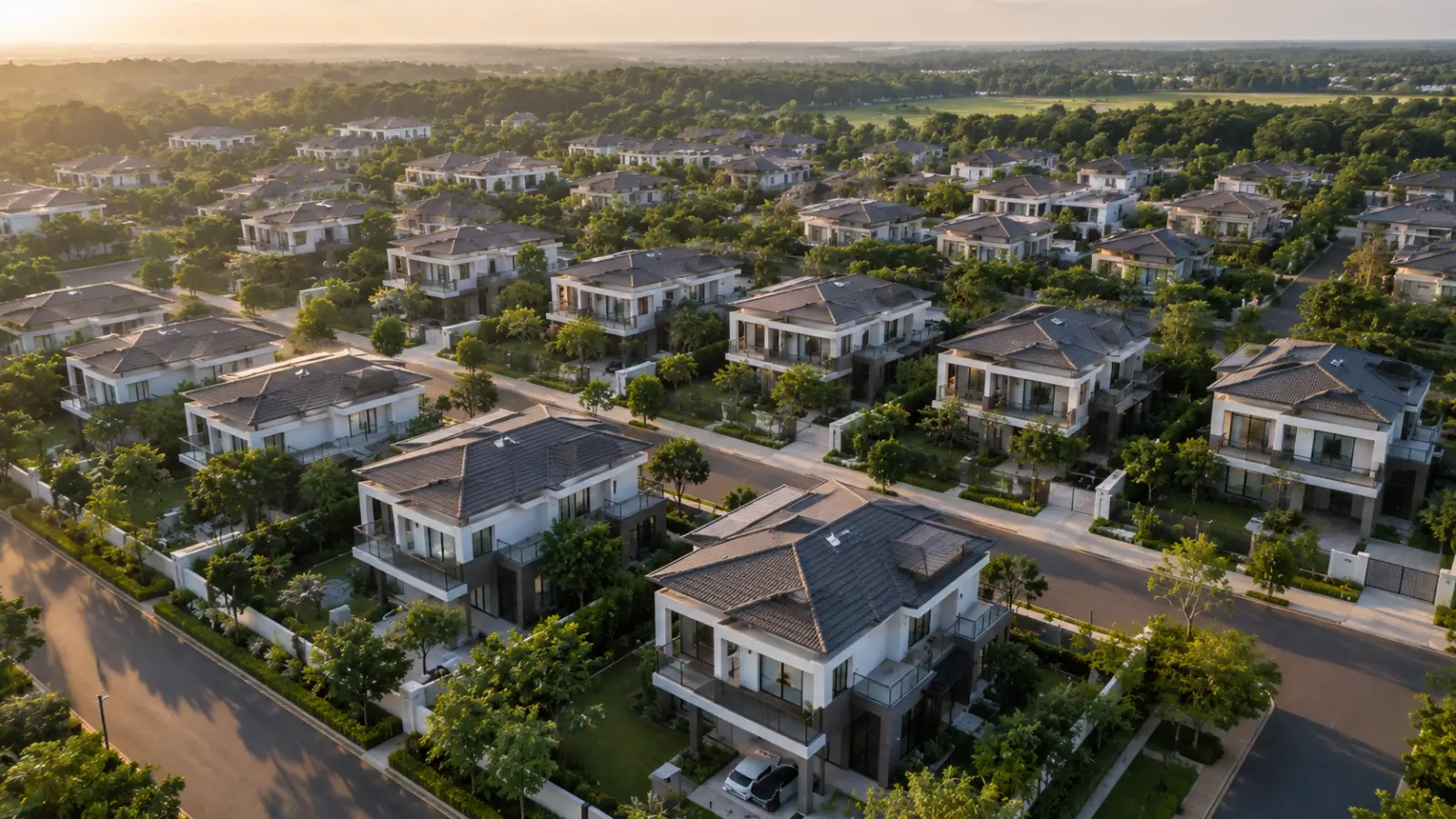
Anyone shortlisting large-format homes in this city runs into the same wall quickly: there are very few of them. The ultra luxury villa supply Bangalore...
Anyone shortlisting large-format homes in this city runs into the same wall quickly: there are very few of them. The ultra luxury villa supply Bangalore shortage is not a marketing line but an arithmetic outcome, and understanding the arithmetic explains both why prices at this format hold and why the situation is unlikely to reverse.
Land assembly is the first constraint. Building single-family houses on 8,000 sft-plus plots requires contiguous parcels measured in tens of acres, and mature micro-markets no longer release them. This enclave occupies roughly 25 acres — assembling that much adjoining land within a belt that already has established schooling, healthcare and employment infrastructure is difficult, expensive and slow. Land further out is available, but it comes without the infrastructure that makes the address worth buying.
Developer economics are the second, and they push the other way. Density is where margin lives in residential development: more units on the same land improves returns and reduces per-unit land cost. Placing 65–70 residences on 25 acres, at fewer than 3 units per acre, deliberately forgoes that. Prevailing North Bangalore densities would put two or three hundred units on the same ground. Under-building at this scale is a choice made against the commercial grain, which is precisely why so few developers make it.
Consequences show up in the market's shape. Typical villa stock across this belt trades between 2,200 and 5,500 sft of built-up area on materially smaller plots, so entry at 7,000 sft on an 8,000 sft plot begins where much of the conventional market finishes. Premium and luxury new launches now trade between Rs 20,000 and Rs 40,000 per sft for ultra-luxury villa product. Total inventory here is 65–70 houses, and that count does not get revised upward later.
Scarcity is worth being precise about, though. It supports pricing through soft periods because the product cannot be replaced by the next launch down the road, and it narrows the buyer pool at exit for exactly the same reason. Rare and liquid are different properties. Reviewing the how 25 acres carry only 65–70 homes shows how the density decision translates into what a buyer actually gets on the ground.
Related reading: Why MAIA Mansion Has 65 to 70 Homes on 25 Acres.
FAQs
Why is large-plot housing scarce in Bangalore?
Assembling contiguous parcels of 25 acres or more inside mature micro-markets has become difficult, and low-density development forgoes the margin that higher density delivers.How does this project compare on density?
65–70 residences across roughly 25 acres, at fewer than 3 units per acre. Prevailing North Bangalore densities would place two or three hundred units on the same ground.Does scarcity guarantee returns?
No. It supports pricing through soft periods because the product cannot easily be replaced, but it also narrows the buyer pool at exit.
Related Articles
Infrastructure Spending in Bangalore and What It Does to Property
Transport investment reprices land more reliably than almost any other public spending, which is why Bangalore infrastructure spending real estate...

Stamp Duty and GST on Property in Karnataka: A Buyer's Guide
Two statutory charges apply to almost every property purchase in the state, and at ultra-luxury ticket sizes they stop being administrative details. Stamp...

How RERA Changed Home Buying in Karnataka
Before registration became mandatory, a buyer's main protection was the developer's reputation. Understanding how RERA changed home buying Karnataka...
North Bangalore's Growth Corridor: Airport, SEZs and Industry
Corridors form where transport, employment and land availability overlap, and North Bangalore growth corridor development has had all three for the better...